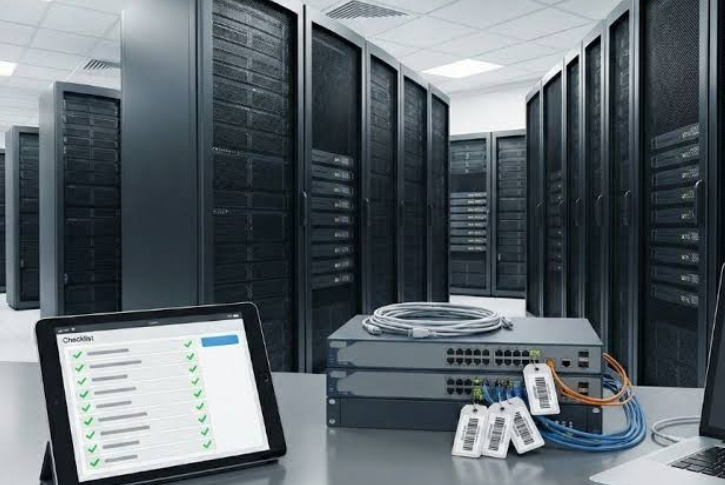

For most of the past twenty years, retiring hardware was treated as a chore at the end of a procurement cycle. Equipment came off the floor, someone found a vendor to take it away, an invoice was paid, and the matter was closed. It sat somewhere below facilities management in organizational priority, and it rarely appeared in a board discussion.
That framing has shifted considerably, and not because the work itself became more interesting. It shifted because three separate pressures converged on the same set of decisions: tightening data protection enforcement, mandatory sustainability disclosure, and hardware costs that have made recovered value genuinely material on a balance sheet.
Organizations that have adapted now approach it asset disposition as an integrated function that touches security, finance, and reporting rather than as a logistics task handled at the end of a refresh. The difference in outcome between the two approaches has grown wide enough to be worth quantifying.
Recovered Value Is No Longer Marginal
Enterprise hardware holds residual value considerably longer than consumer equipment. A three-year-old business laptop, a four-year-old server, and a five-year-old network switch all have functioning secondary markets, and the prices in those markets have firmed up as supply chain volatility made buyers more willing to consider used equipment.
The gap between what an organization receives and what the equipment is actually worth usually comes down to timing and preparation. Value declines steadily with age, so equipment that sits in a storeroom for eight months after decommissioning loses a meaningful percentage of its resale value while doing nothing. Equipment processed promptly, with accessories intact and documentation available, recovers substantially more.
Configuration matters too. Machines with more memory, larger storage, or discrete graphics command better prices, and a provider who evaluates individually rather than by weight will surface that difference. Bulk weight-based pricing is convenient, and it systematically undervalues the better equipment in any mixed batch.
For an organization refreshing several hundred devices a year, the difference between a considered process and a careless one runs into figures that finance departments notice.
The Security Dimension Has Become the Deciding Factor
Recovered value is the upside. Data exposure is the risk that justifies the whole program, and it has become the primary driver for most organizations reviewing this area.
Retired equipment holds whatever it held in production. Enforcement activity and breach disclosures over recent years have repeatedly involved storage media that left an organization without proper sanitization, and the resulting penalties have made this a governance issue rather than an operational one.
The practical implications are specific. Storage media should be inventoried at removal by serial number. Sanitization or destruction should be verified rather than assumed, with solid state media treated differently from magnetic media because the technologies behave differently. Certificates should list individual assets. Chain of custody should be documented from removal through final disposition, with particular attention to the interim period when equipment sits between decommissioning and collection.
None of this is difficult. It is simply a set of controls that has to be defined once and then followed consistently.
Reporting Requirements Have Changed the Conversation
Sustainability disclosure has moved from voluntary to mandatory across an expanding set of jurisdictions and company sizes, and hardware lifecycle sits directly inside the reported scope.
Manufacturing emissions for IT equipment fall under Scope 3, which is the category most organizations struggle to quantify. Extending device lifespan reduces that figure directly, and reuse of retired equipment can be reported as avoided emissions when the downstream handling is documented.
Diversion rates, material recovery weights, and reuse percentages are all reportable metrics, and they come from the processor rather than from internal systems. Organizations that specify reporting requirements at the contracting stage get usable data. Organizations that do not tend to discover during their first disclosure cycle that they have no evidence for a category they are now obliged to report on.
Procurement is feeling this from the other direction as well. Enterprise and public sector buyers increasingly ask suppliers about their own hardware lifecycle practices, which means a documented program has started to appear in tender responses.
Where Programs Typically Fall Down
The most common failure is the storeroom. Equipment gets decommissioned, moved somewhere convenient, and forgotten. Value decays, security exposure persists, and eventually someone clears the room in a hurry under conditions that guarantee a poor outcome on every dimension. Scheduled collections, even for small volumes, prevent this entirely.
The second is inconsistency across sites. A well-run process at head office means little if branch offices dispose of equipment locally with no documentation. Standardizing across the organization, with one named vendor and one procedure, closes gaps that are otherwise invisible until an audit.
The third is treating price as the only selection criterion. The cheapest disposal option is almost always the one doing the least work, and the difference shows up as unverifiable downstream handling, generic certificates, and material that ends up somewhere nobody can account for.
Building Something That Runs Without Supervision
A functioning program has a small number of defined elements. Refresh cycles feed a predictable disposal schedule. Assets are tracked from removal to final disposition with serial-level records. A single vetted vendor handles processing under a contract that specifies destruction standards, reporting requirements, and downstream accountability. Certificates are reconciled against removal records. Recovered value and diversion metrics are reported on the same cadence as other operational reporting.
That structure takes a few weeks to establish and then runs largely on its own. What it produces is a process that recovers more value, creates less risk, and generates the evidence that both auditors and disclosure frameworks now require, without anyone needing to improvise at the end of each refresh cycle.


 By